
Blog
How to Get After-the-Fact Pool Permit Help in Florida
Unpermitted pool in Florida? Learn the step-by-step after-the-fact pool permit process, documents needed, engineering rules, and costs in 2026.
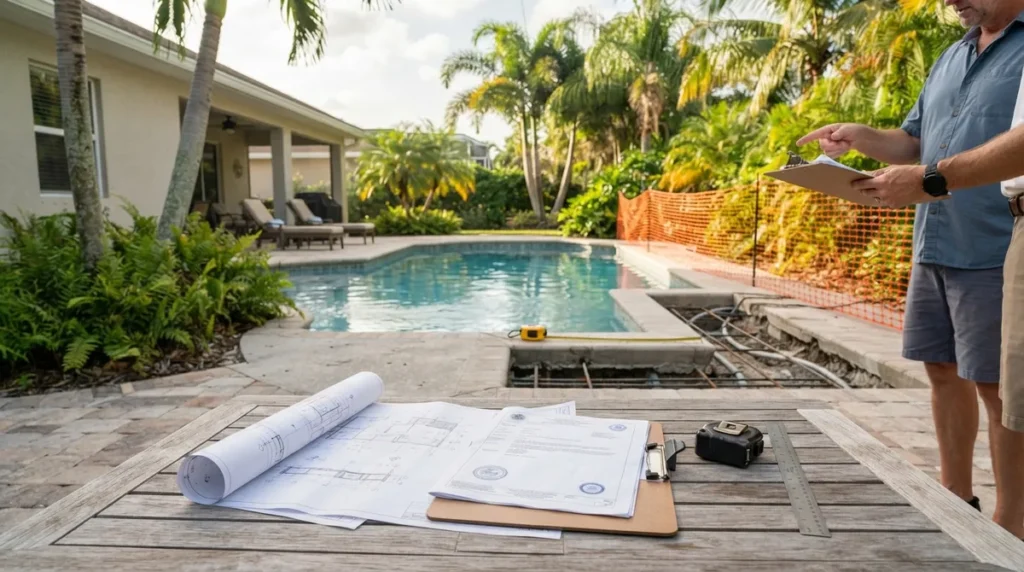
Key Takeaways
-
Confirm which local building department controls your property first, since after-the-fact pool permit requirements vary by city and county across Florida.
-
Check for an open or expired permit before filing a new one, because an expired permit is handled differently than a pool with no paperwork at all.
-
Expect an engineer's letter or sealed drawings if the reinforcing steel or other structural work was concealed before inspection, as this is the biggest factor in cost and timeline.
-
A permit opens the review but does not automatically legalize work that fails code or zoning; the building official has final say and may require exposing concealed work or corrections.
-
Ask about related permits early, since fencing or barriers, electrical bonding, plumbing, screen enclosures, and zoning setbacks are often reviewed separately and can stall final approval.
-
Private residential pools follow local building department review, while public or HOA pools also require Department of Health involvement under Florida Statutes Chapter 514.
So you just discovered your pool was never permitted. Maybe you bought the house and the seller "forgot" to mention it. Maybe a previous owner built it, or a contractor promised to pull the permit and quietly never did. Take a breath. You are far from alone, and in 2026 this is one of the most common problems we see across the state.
If you are looking for after the fact pool permit help in Florida, the good news is that there is a real, well-worn path to fix it. Your local building department can review an existing pool, inspect what is there, and (when the work meets code) sign it off. The catch is that the process is different in every city and county, and a pool is not a simple structure. It involves barriers, electrical bonding, plumbing, setbacks, and sometimes hidden steel that nobody ever inspected.
This guide walks you through the steps in plain English, shows what the building department will want to see, and explains when it makes sense to bring in a permitting pro. Whether you are a homeowner, a realtor racing toward closing, a general contractor, or a pool builder cleaning up an old job, you will leave knowing exactly what to do next.
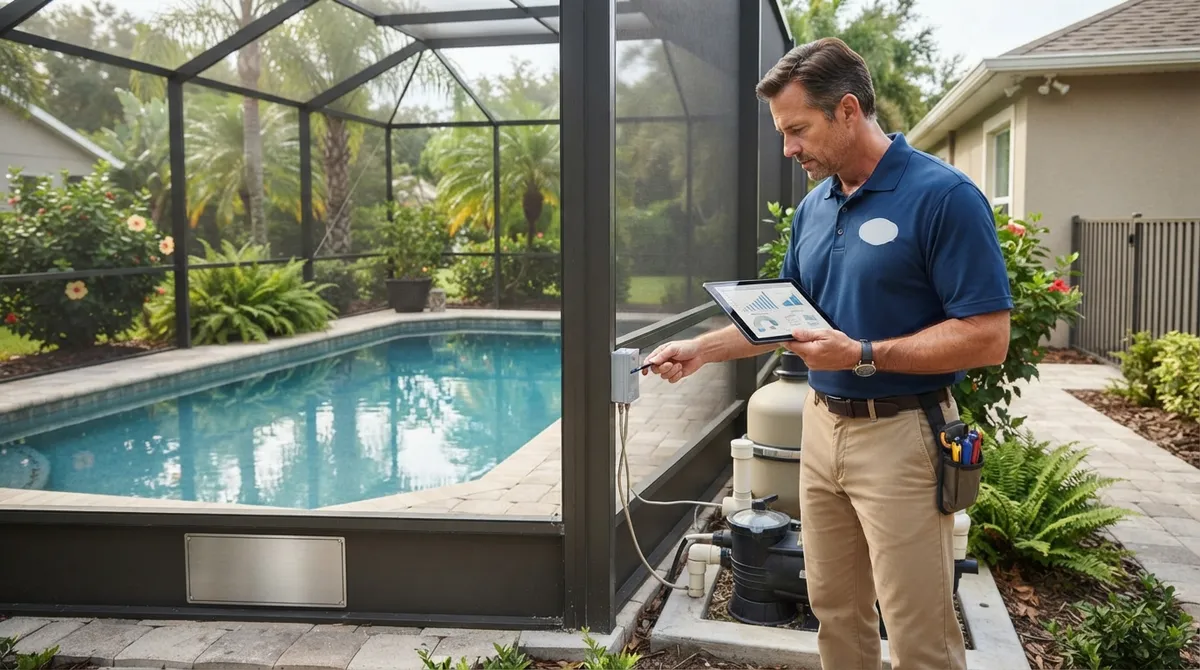
What an After-the-Fact Pool Permit Actually Is
An after-the-fact (ATF) pool permit is a local building-department process for documenting and evaluating a pool that was built, or partially built, without the required permit. Think of it as asking the county or city to review the work now, instead of when it should have happened.
Here is the key thing to understand: in Florida, building permits are administered locally. Florida Statutes §553.79 sets up the framework for permits and inspections, but your local building department decides what plans, inspections, certifications, and corrections it needs. That means the answer in Miami-Dade will not match the answer in Sarasota or Duval.
Also, getting a permit is not the same as being "forgiven." A permit does not automatically legalize work that fails code or zoning. The department may require you to expose concealed work, get an engineer's certification, make corrections, or, in some cases, remove or rebuild noncompliant pieces. Most pools can be brought into compliance, but it helps to go in with realistic expectations.
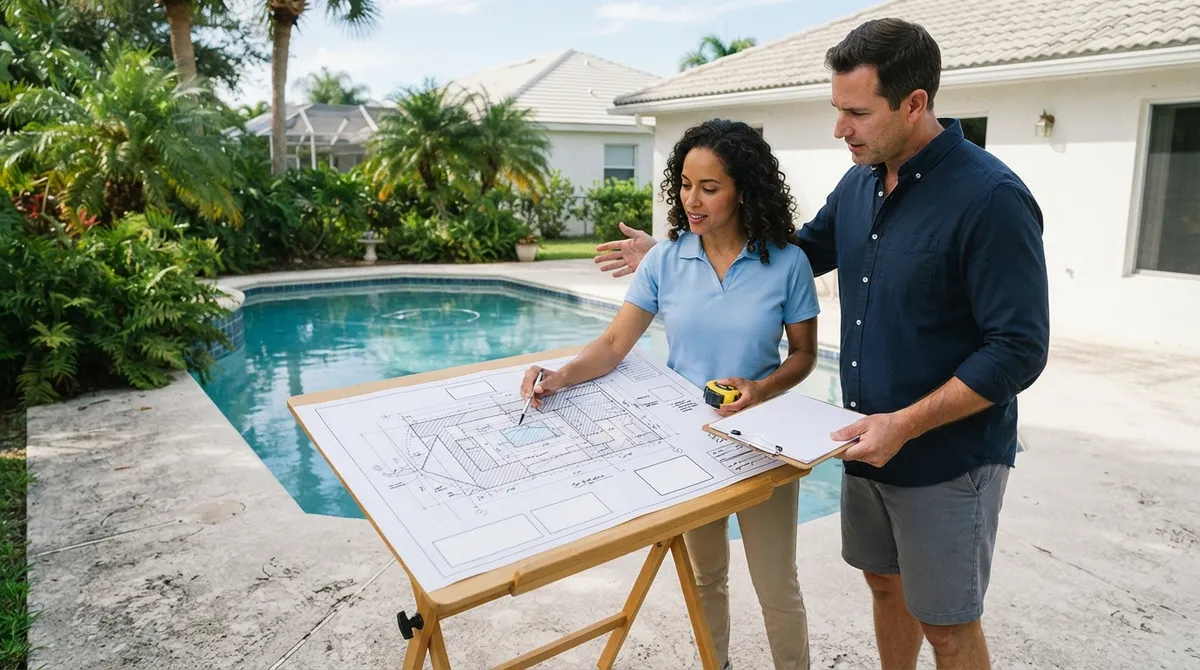
Step-by-Step: How to Get an After-the-Fact Pool Permit
Every jurisdiction has its own quirks, but the general path looks like this:
- Confirm the correct jurisdiction. Pools near city lines can be tricky. Your mailing address may say one city while the parcel is actually governed by the county. Our building department lookup tool can help you find the authority that actually controls your property.
- Search for open or expired permits. Before filing anything new, check whether an old permit was started and abandoned. Our open permit search is a good first stop, because an expired permit is handled differently than a pool with no paperwork at all.
- Ask the building department for its ATF requirements. Request the current checklist, fee schedule, and any required forms. Ask specifically whether separate zoning, electrical, plumbing, or fence permits are needed.
- Gather your documents. Plan on a survey or site plan, pool details, construction drawings, and safety documentation (more on this below).
- Hire professionals where required. Many departments want sealed drawings or an engineer's letter for an existing pool.
- Submit, track, and respond to comments. Plan reviewers will often send corrections. Answer them quickly and completely.
- Pass the inspections and close out the permit. Once the final inspection is approved, the pool is officially on the record.
What Documents the Building Department Usually Wants
The exact submittal depends on the jurisdiction and on how far along the pool was built. In general, though, expect requests for the items below.
| Document | Why It Is Needed | Who Usually Provides It |
|---|---|---|
| Survey or site plan | Shows the pool, setbacks, easements, and lot coverage | Surveyor or drafter |
| Pool construction drawings | Documents dimensions, depth, shell type, and equipment | Drafter or engineer |
| Structural engineer letter or sealed plans | Certifies the shell and reinforcement meet code | Florida-licensed engineer |
| Electrical and bonding documentation | Confirms safe grounding and bonding of pool equipment | Licensed electrician |
| Plumbing and equipment details | Verifies pumps, heaters, and drains | Licensed plumber or pool contractor |
| Barrier and safety details | Shows fencing, gates, alarms, or enclosure compliance | Contractor or drafter |
Having these ready before you file saves a lot of back-and-forth. Our site plan and as-built drawing services exist for exactly this reason, because a clean, accurate drawing set is often what separates a two-round review from a six-round one.
Will You Need an Engineer for an Existing Pool?
Often, yes. This is one of the most common questions we hear, and it is the biggest swing factor in cost and timeline.
Here is why. The most important structural inspection on an in-ground pool happens before the concrete goes in: the reinforcing steel inspection. If nobody inspected it, nobody can see it now. Some jurisdictions publish specific rules for this. For example, Indian River County's published requirements for expired and after-the-fact residential pools call for compliance with the current Florida Building Code and specified ANSI standards, and may require a Florida-licensed engineer to certify construction when an in-ground steel inspection was never approved.
Not every county does it the same way, so do not assume. But when concealed work is involved, an engineer letter backed by structural engineering review is a very common requirement. Depending on the department, the engineer may do a site visit, review photos or core samples, or ask you to expose a small portion of the shell.
If you want to see how that plays out in practice, our guide on whether a sealed drawing is required for after-the-fact permits breaks it down further.
What Happens When Pool Work Was Concealed Before Inspection
Concealed work is where after-the-fact pool permits get more involved. If the steel, plumbing lines, or bonding grid are already buried under concrete and decking, the building official has to decide how to verify them.
Common options include:
- Engineer certification based on a site evaluation and available evidence
- Exposing a limited area so an inspector can verify reinforcement or bonding
- Non-destructive testing if the jurisdiction accepts it
- Corrective work to bring something up to current code, such as a missing bond wire or a nonconforming barrier
- Removal or reconstruction of a noncompliant element in the less common worst case
The local building official always has the final say on what is acceptable. A permitting professional cannot overrule that, but an experienced one can help you present the strongest possible case and avoid unnecessary demolition. We cover that topic in more depth in Will You Really Have to Demolish Unpermitted Work?
Do You Need Separate Permits for Fencing, Electrical, and Enclosures?
This is a spot where homeowners get tripped up. A pool is rarely a single permit. Depending on your jurisdiction, the project may involve several related approvals:
| Related Item | Often Reviewed Separately? | Common Concern |
|---|---|---|
| Pool barrier or fence | Often yes | Height, gate latches, self-closing hardware |
| Electrical and bonding | Often yes | Bonding grid, GFCI protection, equipment wiring |
| Plumbing and gas lines | Sometimes | Heater connections, drain covers |
| Screen enclosure or pool cage | Often yes | Wind-load engineering and anchoring |
| Zoning review | Often yes | Setbacks, lot coverage, easements |
Ask the department up front which of these apply to you. Missing one can stall your final approval even when the pool itself passes. If a screen enclosure is part of your situation, our article on why your Florida pool cage needs a permit is worth a read.
How Much Does an After-the-Fact Pool Permit Cost in Florida?
This is the question everyone asks, and the honest answer is: it depends on where you live. No single statewide after-the-fact residential pool permit fee or penalty exists in the sources we rely on. Your local building department's current fee schedule is the authoritative source.
Here is what generally drives the total:
- Permit and plan review fees set by your city or county
- Additional fees or penalties that some local governments assess for work done without a permit, which vary by jurisdiction
- Engineering and drafting costs for sealed drawings, letters, or as-builts
- Trade permits for electrical, plumbing, or fencing
- Corrections or exposure work if inspectors need to verify concealed items
One quick note to avoid confusion: you may see fee ranges online from Florida Statutes §514.033, such as $275 to $500 for public-pool construction plan approval. Those are Department of Health fees for public swimming pools under Chapter 514. They are not a price list for a typical private backyard pool, and a residential pool should not be assumed to follow that process.
For a deeper look at how costs stack up, see After-the-Fact Permit Florida Cost and How Much Does It Cost to Legalize an Unpermitted Pool in FL?
Residential Pools vs. Public Pools: Know Which Rules Apply
Florida treats these two categories very differently, and mixing them up can send you down the wrong road.
| Feature | Private Residential Pool | Public Pool |
|---|---|---|
| Governing authority | Local building department | Local building department plus Florida Department of Health |
| Key statute | Fla. Stat. §553.79 (permits and inspections) | Fla. Stat. Chapter 514 |
| Operating permit | Not typically required for a single-family pool | Department of Health operating permit required |
| After-the-fact process | Local ATF review | Local review plus health-department requirements |
If you own an HOA pool, a condo pool, or a hotel pool, you are in the public-pool world and should plan on health-department involvement. If you own a backyard pool at a single-family home, you are almost certainly dealing with the local building department alone.
When It Makes Sense to Hire a Permitting Professional
You can absolutely start on your own by calling the building department. But many people find the process is a lot more manageable with help, especially when a closing date, a lender, or a code notice is putting pressure on the clock.
A permitting-services partner can help you:
- Identify the correct jurisdiction and its current ATF requirements
- Assemble the application, site plan, and construction documents
- Coordinate licensed design and engineering support
- File, track, and respond to review comments
- Schedule inspections and push toward closeout
The building official still makes every final decision, and no honest professional can promise a particular outcome. What a good partner does is remove guesswork, prevent rejected submittals, and keep your file moving.
This is exactly what we do at 1 Contractor Solutions. We work across all 67 Florida counties, and our drafting and engineering are done in house, with our own engineer signing and sealing the work. That means when a reviewer flags something, we fix it directly instead of waiting on an outside consultant. If your pool is tied to an existing violation, our after-the-fact and expired permit service and our code compliance violation help are a natural fit. Pool pros can also see how we support pool and spa contractors, and realtors can learn about our closing support when an unpermitted pool threatens a sale.
Tips for Different Readers
Homeowners and Residential Property Owners
Start by finding out whether a permit was ever opened. If you bought the property recently, review your closing documents and ask the title company what they found. Do not panic about fines before you know your jurisdiction's actual policy, because enforcement approaches vary widely.
Realtors and Investors
An unpermitted pool can freeze a closing, spook a lender, or trigger an insurance question. Move early, because the permit timeline is rarely as fast as a closing calendar. Our guide on whether a permit hold can delay a Florida real estate closing explains the timing risks.
General Contractors and Pool Builders
If you inherited a half-finished pool or you are cleaning up an older job, document everything you can with photos and prior inspection records. Sealed as-builts and an engineer's letter are often your best friends here, and you can review our general contractor services for more on how we can plug in.
Common Mistakes to Avoid
- Assuming a permit equals approval. A permit opens the review. It does not erase code problems.
- Skipping the jurisdiction check. Filing with the wrong authority wastes weeks.
- Ignoring related permits. Fencing, electrical, and enclosures often need their own sign-off.
- Hiding concealed work from the engineer. Honest information leads to a better, faster solution.
- Waiting until a code notice arrives. Proactive filing is usually calmer than reacting to enforcement.
For a broader checklist, our article How to Get an After-the-Fact Pool Permit in Florida and 7 Steps to Legalize an Unpermitted Pool in Florida (2026) are good companions to this one.
Ready to Get Your Pool Legal?
An unpermitted pool feels stressful, but it is a solvable problem. With the right documents, honest engineering, and a patient approach to the review process, most pool owners get to a clean, closed permit. If you would like a team that handles the filing, drawings, engineering, and tracking under one roof, we would love to help. You can get a free quote today, and you can also visit us on Google — 1 Contractor Solutions to see what customers say. Prefer to keep up with Florida permitting news? Follow us on LinkedIn or follow us on Facebook. For official background on how permits and inspections work statewide, you can also read the text of Florida Statutes §553.79.
FAQs
How do I get an after-the-fact pool permit in Florida?
Start by confirming which building department controls your property, then ask for its current after-the-fact checklist and fee schedule. You will typically submit a site plan, pool drawings, and any required engineering, then pass inspections. A permitting pro can handle the filing and tracking so you are not guessing along the way.
Will I need an engineer to certify my existing pool?
Often, yes, especially if the reinforcing steel or other structural work was concealed before an inspection. Requirements vary by jurisdiction, so your local building department decides what certification it needs. An engineer's letter or sealed drawings is a very common way to satisfy that.
How much does an after-the-fact pool permit cost in Florida?
There is no single statewide price, because fees and any additional penalties are set locally. Your total will usually include permit and review fees plus drafting, engineering, and any related trade permits. Ask your building department for its current after-the-fact fee schedule to get a real number.
Can an unpermitted pool be brought up to current Florida Building Code requirements?
In many cases, yes. The building department may require corrections, inspections, or engineering to confirm the pool and its safety features meet code. In the less common worst case, a noncompliant element may need to be reworked or removed.
Do I need separate permits for pool electrical, fencing, or a screen enclosure?
Frequently, yes. Many jurisdictions review barriers, electrical bonding, plumbing, zoning, and screen enclosures separately from the pool itself. Ask your building department which ones apply so your final approval does not get held up by a missed item.
We do this work every day across all 67 Florida counties. Call (866) 314-6931 and we will tell you what your situation actually requires — including when you do not need us.
Related services
Permit Facilitation & Filing
You have a crew scheduled, a client asking for dates, and a permit sitting somewhere in a queue you cannot see. We file it, w…
See the servicePlan Review Coordination
A permit in plan review is not one queue. On a commercial project it can be six queues, each with its own reviewer, its own c…
See the serviceReady to get your permit moving?
One call tells you which jurisdiction controls your project, what it will take, and what it will cost. Most of the time we can scope it on the phone.