
Blog
8 After the Fact Plumbing Florida Mistakes to Avoid in 2026
Avoid 8 costly after the fact plumbing Florida mistakes. Learn how permits, fees, inspections, and local rules work in 2026.
Key Takeaways
-
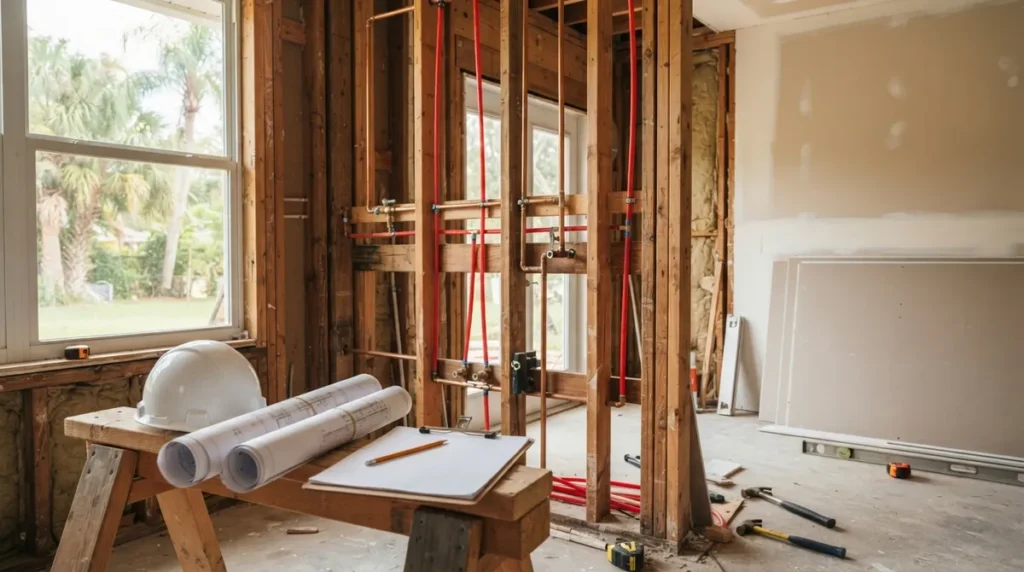
Stop all finishing work and photograph exposed plumbing before calling the building department, since inspectors can't approve work they cannot see and you may have to open walls back up.
-
There is no statewide after-the-fact plumbing process or fee schedule in Florida; each city and county sets its own requirements, so confirm locally before relying on any cost estimate.
-
Approval is not guaranteed: the building official may require documentation, plans or as-builts, access to the installation, and inspections, and noncompliant work can require correction or replacement.
-
Some local departments require a licensed plumbing contractor to pull the after-the-fact permit, while others allow owner-builder permits for owner-occupied homes, so ask who may apply.
-
Penalties for work started without approval may equal 100% of the usual permit fee on top of the regular fee in some jurisdictions, so verify current fees and penalties with your local office.
-
If a code enforcement notice arrives, note every deadline, voluntarily apply for the permit promptly, and keep proof of filing, since proactive compliance is often viewed favorably.
Let's be honest: nobody wakes up hoping to deal with plumbing paperwork. But if you've discovered that pipes were replaced, a water heater was swapped, or a bathroom was added without a permit, you're probably feeling a little stressed right now. Take a breath. You're far from alone, and this is a very fixable problem.
In Florida, an after the fact plumbing permit is the local process for asking the building department to approve regulated plumbing work that was started or finished before the required permit was pulled. It isn't a magic eraser, and approval isn't automatic. But with the right approach, most homeowners, contractors, and buyers get through it just fine.
The trouble is that a few common missteps can turn a manageable situation into an expensive one. In this guide, we'll walk through eight mistakes we see over and over, plus how to sidestep each one. Whether you're a general contractor cleaning up a job, a realtor facing a closing delay, or a homeowner who inherited someone else's shortcuts, you'll find practical help below.
First, What Does "After the Fact" Plumbing Actually Mean?
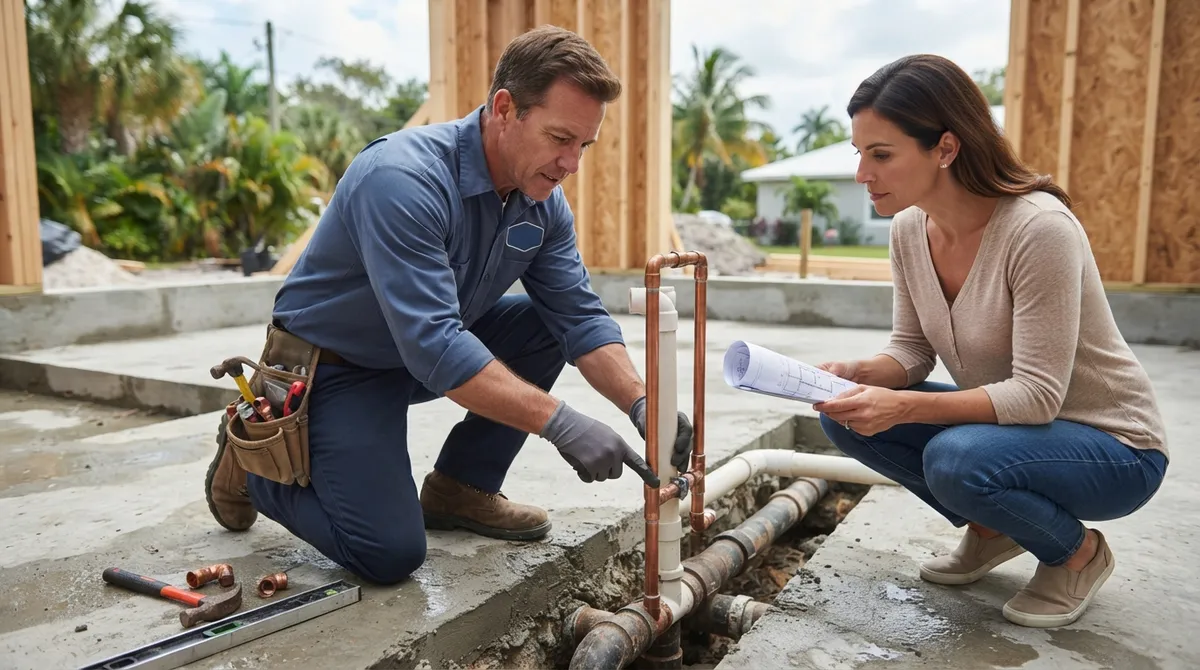
Florida Statutes §553.79 generally requires a permit before regulated construction or alteration begins. The Florida Building Code extends that to the installation, alteration, replacement, extension, or repair of regulated plumbing systems. When work happens without that permit, the owner (or contractor) applies to the local enforcing agency to bring it into compliance.
Here's the key point that surprises people: there is no single statewide after the fact plumbing application or fee schedule. Each city and county building department runs its own process. What works in Tampa may look different in Fort Lauderdale, Miami-Dade, or Polk County.
What Usually Needs a Permit (and What Might Not)
| Type of Plumbing Work | Permit Typically Required? | Notes |
|---|---|---|
| Clearing a stoppage | Often exempt | No pipes, valves, or fixtures replaced or rearranged |
| Repairing a simple leak | Often exempt | Only if no replacement or rearrangement occurs |
| Replacing concealed drain, water, soil, waste, or vent piping | Yes | Treated as new work; permit and inspection generally required |
| Adding or relocating fixtures | Yes | Includes bathrooms, kitchens, laundry |
| Water heater replacement | Usually yes | Confirm with your local department |
| Repiping a home | Yes | Full inspection sequence expected |
Exemptions can be interpreted differently from one jurisdiction to the next, so always confirm with your local building department before relying on one.
Mistake 1: Covering Up the Work Before Calling the Building Department
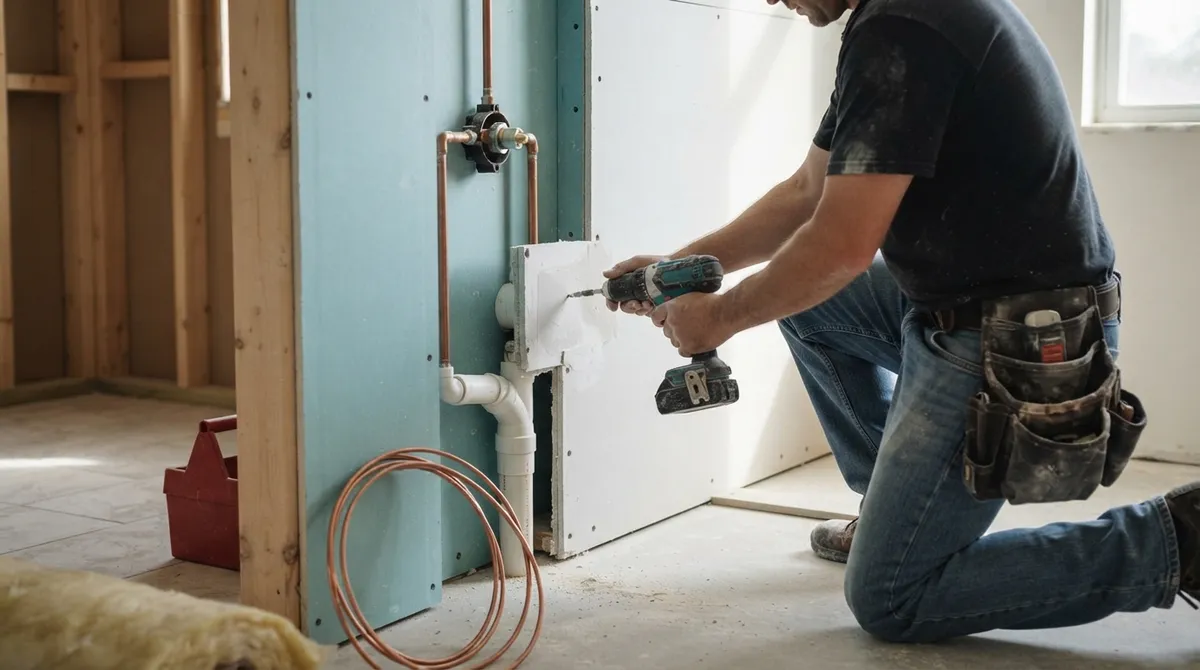
This is the big one. Plumbing is usually hidden inside walls, under slabs, and above ceilings. If you add drywall, tile, flooring, or cabinets before talking to the building department, you may be asked to open it all back up.
Inspectors can't approve what they can't see. Depending on your jurisdiction, they may require finishes to be opened, or they may accept other evidence to verify the work. Either way, the less you cover, the more options you keep.
- Pause finishing work the moment you realize a permit is missing.
- Take dated photos of everything currently exposed.
- Call the building department for your property's city or county before closing anything up.
Mistake 2: Assuming Approval Is Guaranteed
An after the fact application starts a review. It doesn't promise a stamp of approval. The building official may require a description of the work, plans or other documentation, access to the installation, and inspections to confirm it meets the Florida Building Code and local rules.
If the installation doesn't comply, you may face correction, exposure, or even removal and replacement. That's why it pays to assess the work honestly before you apply, not after.
Questions Worth Asking Before You File
- Was the work done by a licensed plumbing contractor, or by an unlicensed person?
- Are the materials code-approved for their use (pipe type, fittings, venting)?
- Can the major components be verified by inspection or documentation?
- Is there an open code enforcement case tied to the property?
If you're unsure about any of these, a quick conversation with a permitting professional can save you real money and time. Our team at 1 Contractor Solutions walks owners through this every week, and our after-the-fact and expired permits service is built for exactly this situation.
Mistake 3: Guessing at the Fees and Penalties
Florida Statutes §553.79 authorizes local enforcing agencies to adopt reasonable permit fees. Code materials surfaced in our research describe a penalty equal to 100% of the usual permit fee, charged on top of the regular fee, for work begun without required approval. In plain English, that can mean paying roughly double the normal permit cost.
However, charges and procedures vary by jurisdiction, and we found no reliable statewide average cost for after the fact plumbing permits. Don't trust a number you saw in a forum post. Ask your local department for its current fee schedule, and see our deeper breakdown in after the fact permit Florida cost.
| Cost Factor | What to Expect |
|---|---|
| Standard permit fee | Set by the local building department |
| Penalty for work started without approval | May equal 100% of the usual fee, in addition to the regular fee (verify locally) |
| Inspection fees | Varies; may include re-inspection charges |
| Documentation or drawings | May require as-builts, sketches, or engineer letters |
| Opening and repairing finishes | Depends on what must be exposed |
Mistake 4: Skipping the Licensed Contractor Question
Who is allowed to apply? That's one of the most common questions we hear, and the answer depends on the jurisdiction and the type of work. Some departments require a licensed plumbing contractor to pull the permit. Others allow owner-builder permits under certain conditions for owner-occupied residences.
Don't assume. Ask the building department directly whether a licensed contractor must be involved in your after the fact application. If you're considering the owner route, our overview of owner-builder permits can help you understand the basics, and our guide on who can pull a permit in Florida goes deeper.
For contractors, this is also a licensing matter. Working without a required permit can create trouble with your license and reputation, so it's smart to clean it up promptly and professionally.
Mistake 5: Showing Up With an Incomplete Package
Nothing slows an after the fact application down like missing paperwork. Every building department has its own checklist, but most will want some combination of the following:
- A completed permit application for the plumbing work
- A clear description of what was installed, replaced, or altered
- Plans, riser diagrams, or as-built sketches showing the system
- Proof of contractor licensing, if required
- Product or material information for pipes, fixtures, and water heaters
- Photos of the work before it was concealed
- Owner authorization or affidavits, where the department requests them
Incomplete submissions get kicked back, and every round trip costs days or weeks. If drawings are required, as-built drawings prepared by an experienced drafter can make the review dramatically smoother. When a reviewer wants a professional opinion on the installation, an engineer letter or sealed MEP engineering documentation can fill the gap.
Mistake 6: Ignoring an Open Code Enforcement Case
Sometimes the after the fact permit isn't your idea at all. A neighbor complaint, an inspector spotting unpermitted work during another job, or a notice in the mail can start a code enforcement case. Ignoring it is a mistake, because fines can grow and the situation can escalate.
The good news is that voluntarily applying for the permit is often viewed favorably. It signals you're working to comply. If you've received a notice, read our guides on code compliance violations and what to do when you get a code enforcement notice.
A Simple Response Plan
- Read the notice carefully and note every deadline.
- Contact the issuing office to confirm what they need.
- Apply for the after the fact permit and keep proof of the filing.
- Schedule inspections promptly and correct any failures.
- Request closure of the case once the permit is finaled.
Mistake 7: Waiting Until a Closing Is Days Away
Real estate professionals know this scenario well. An inspection or appraisal turns up a bathroom or kitchen remodel with no permit history, and suddenly the closing date is wobbling. Lenders, title companies, and insurers can all get nervous about unpermitted plumbing.
The earlier you start, the better. Permit research and inspection scheduling take time, and you can't control the building department's calendar. If you're on a tight clock, our urgent permit rescue and realtor closing support services are designed to keep deals moving. You may also find our article on open permits found at closing useful.
Buyers aren't off the hook either. If you're purchasing a home with a history of undocumented plumbing upgrades, ask for permit records before closing. Our free open permit search tool is a great place to begin.
Mistake 8: Trying to Navigate Every Jurisdiction Alone
Florida has hundreds of permitting jurisdictions, each with its own portal, checklist, fee schedule, and reviewer habits. Polk County, the City of Fort Lauderdale, and Miami-Dade County all publish their own plumbing permit guidance, and they don't match. Even figuring out which agency controls your address can be tricky near city lines.
If you're not sure where to start, try our building department lookup to find the right office. From there, local knowledge makes a real difference. We work in all 67 Florida counties, including Miami-Dade County, Broward County, Hillsborough County, and Polk County, so we know how each one tends to handle these applications.
Your Step-by-Step Path Forward
Ready to get moving? Here's a straightforward roadmap you can follow, adapted to your local rules:
- Stop and document. Pause any further work and photograph everything visible.
- Identify your jurisdiction. Confirm whether your property falls under the city or the county.
- Call the building department. Ask about their after the fact plumbing process, required documents, inspection sequence, penalties, and any related enforcement case.
- Gather documentation. Collect receipts, product information, contractor details, photos, and any drawings.
- Prepare plans or letters if needed. Have as-builts or engineer documentation ready when the reviewer asks.
- File the application. Submit the complete package and pay the required fees.
- Pass the inspections. Provide access, expose work if required, and correct any deficiencies.
- Close the permit. Get final approval and keep the paperwork for your records and future sale.
If you want a broader look at the process beyond plumbing, our guides on how to get an after-the-fact permit in Florida and legalizing unpermitted work in Florida are great companions to this article.
Why Getting This Right Matters Long Term
It might be tempting to leave sleeping dogs lie. But unpermitted plumbing can surface later through insurance claims, appraisals, home inspections, or a future sale. Cleaning it up now gives you documented, inspected work that protects your property value and your peace of mind.
Permitted plumbing also means a licensed professional's work has been verified for safety. Proper venting, correct slopes, and leak-free connections aren't just paperwork items. They protect your home from water damage and your family from sewer gas and contamination.
You've Got This (And You Don't Have to Do It Alone)
After the fact plumbing in Florida can feel intimidating, but it's really just a process: investigate, document, apply, inspect, and close. Avoiding the eight mistakes above keeps that process smooth and affordable. If you'd like a seasoned team in your corner, 1 Contractor Solutions acts as your outsourced permitting department, handling filing, tracking, reviewer comments, and closeout, with in-house drafting and sealed engineering when you need it.
Curious how other customers feel about working with us? Visit us on Google — 1 Contractor Solutions and read their experiences. You can also follow us on LinkedIn or follow us on Facebook for Florida permitting tips. For official statute language, you can review Florida Statutes §553.79 directly.
Ready to turn that unpermitted plumbing into a closed, approved permit? Reach out today and get a free quote. We respond within 30 minutes, day or night, and we'd be happy to help you get back to enjoying your home or moving your project forward.
FAQs
Do I need a permit for plumbing work in Florida?
In most cases, yes. Florida law generally requires a permit before regulated plumbing work like installing, replacing, extending, or altering systems. Small jobs such as clearing a stoppage or fixing a leak without replacing or rearranging pipes, valves, or fixtures may be exempt, but always confirm with your local building department first.
How much does an after the fact plumbing permit cost in Florida?
There's no single statewide price, since each city and county sets its own fees. Some code materials describe a penalty of 100% of the usual permit fee on top of the regular fee for work started without approval, so costs can run higher than a standard permit. Your local building department can give you the current fee schedule.
Can an inspector approve plumbing that's already covered by drywall or flooring?
Sometimes, but it depends on your jurisdiction. Because plumbing is often concealed, the building official may require finishes to be opened or ask for other evidence so the work can be verified. If it can't be verified or doesn't comply, correction or removal and replacement may be required.
Can a homeowner apply for an after the fact plumbing permit, or must a licensed plumber do it?
It varies by local building department and the type of work. Some jurisdictions require a licensed plumbing contractor, while others allow owner-builder permits under certain conditions. Call your department early and ask exactly who is permitted to apply.
What happens if unpermitted plumbing fails inspection?
Don't panic, because this is common and fixable. The inspector will note the deficiencies, and you'll typically correct them and schedule a re-inspection. In more serious cases, the work may need to be exposed, redone, or removed and replaced before the permit can be finaled.
We do this work every day across all 67 Florida counties. Call (866) 314-6931 and we will tell you what your situation actually requires — including when you do not need us.
Related services
Permit Facilitation & Filing
You have a crew scheduled, a client asking for dates, and a permit sitting somewhere in a queue you cannot see. We file it, w…
See the servicePlan Review Coordination
A permit in plan review is not one queue. On a commercial project it can be six queues, each with its own reviewer, its own c…
See the serviceReady to get your permit moving?
One call tells you which jurisdiction controls your project, what it will take, and what it will cost. Most of the time we can scope it on the phone.